Last week the Arterial team flew to Oklahoma City for the OMAG AI Conference, our first out-of-state event since launching the company. We came to demo the platform; we left with something more useful — a clearer picture of what local government and municipal risk pools actually want from AI right now, and what they are tired of hearing about it.
The conference was organized by the Oklahoma Municipal Assurance Group, Civic Marketplace, and the Alliance for Innovation, and convened by Ron Holifield. The audience was the people who carry the consequences of bad infrastructure decisions: city managers, public works directors, finance officers, and the underwriting and claims teams at the pools who insure them.
Why a risk pool audience matters for roadway AI
When a sidewalk trip-and-fall or a missed pothole turns into a claim, it does not just hit a city's general fund — it routes through the municipal insurance pool that wrote the policy. That makes the pools structurally allergic to "we'll get to it next inspection cycle." They want defensible records: when a defect appeared, how severe it was, who knew about it, and how fast it moved through the work queue.
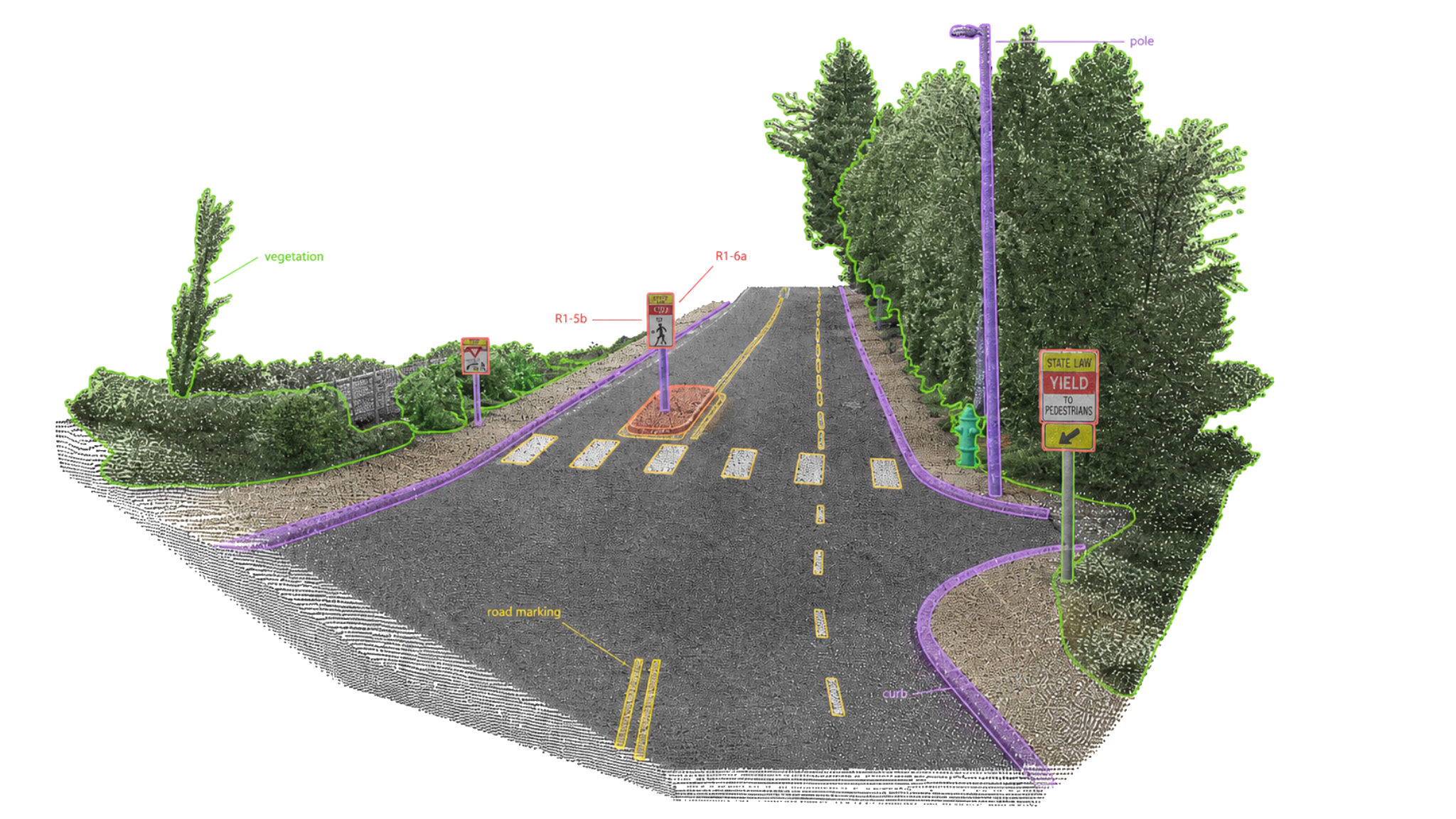
That is a pretty exact fit for what passive fleet sensing produces. A vehicle that already drives a route every week generates a timestamped, geo-located inventory of the things that produce claims — pavement defects, faded crosswalks, ADA non-compliant ramps, leaning signs, drainage that has started to fail. The output is not a video archive; it is structured, prioritized, and dated, which is the form an underwriter or a city attorney can use.
A lot of the most productive conversations in Oklahoma City were not about technology. They were about workflow: where does the data have to land for a pool's loss-control engineer to use it, and what does a member city need to see for the same data to be useful to a street superintendent the next morning. Same observations, two very different consumers.
What we heard from the other AI companies in the room
We were one of several AI vendors on the agenda. The mix was healthy — early-stage companies like us alongside more mature platforms tackling permits, citizen engagement, document review, and case management. A few themes were consistent across the room:
Municipalities are past the demo phase. The "look what AI can do" pitches that worked two years ago do not land anymore. Buyers want pilot structures with defined success criteria, defensible procurement paths, and clear answers on data ownership, retention, and PII.
Integration is the moat, not the model. Almost every conversation eventually surfaced the same constraint: the AI is only as useful as its hand-off into Cartegraph, Lucity, Cityworks, Esri, or whatever system of record the agency already runs. Companies that show up with feature-service APIs and structured exports keep moving; the ones that ask the city to log into a separate dashboard tend to stall.
Risk and procurement live together. For municipal buyers, especially smaller ones, the pool's blessing meaningfully shortens the sales cycle. That is why an event like OMAG matters — it is one of the few rooms where the underwriters, the buyers, and the technology vendors are in the same conversation.
What we took back to Boulder
A few things made the trip back to Colorado specific:
The vocabulary inside risk pools is more precise than the marketing world usually gives them credit for. Words like exposure, severity tier, loss frequency, and defensible documentation are the actual user requirements. We are tightening how Arterial's output maps to those terms so loss-control engineers can read a defect report without translating it first.
There is real appetite for cross-jurisdictional aggregation. A pool that insures dozens of cities has a natural interest in seeing pattern-level data — which crosswalk markings are failing fastest, which sign types are most often missing, which neighborhoods are accruing claim risk before the claims arrive. That is a different product surface than a single-city dashboard and worth building thoughtfully.
The "boring middle" of the work matters most. Several agencies told us their problem is not detection — it is that detections from one system never make it to the work order that fixes them. The handoff is where AI projects die. We have been investing on the assumption that this is the real product, and OMAG reinforced it.
Thanks
A personal thank you to Ron Holifield for inviting us to attend and putting us on stage in front of a room that mattered. Thanks to the Oklahoma Municipal Assurance Group, Civic Marketplace, and Alliance for Innovation for organizing an event that brought the right people into the same building. And thanks to the city, county, and pool folks who pulled us aside between sessions to challenge our assumptions — those conversations are why we came.
If you are at a city, county, DOT, or municipal pool thinking about how roadway AI fits into your risk and capital planning, we would like to talk. The Solutions page is a better starting point than a long email, and Contact goes straight to the founders.